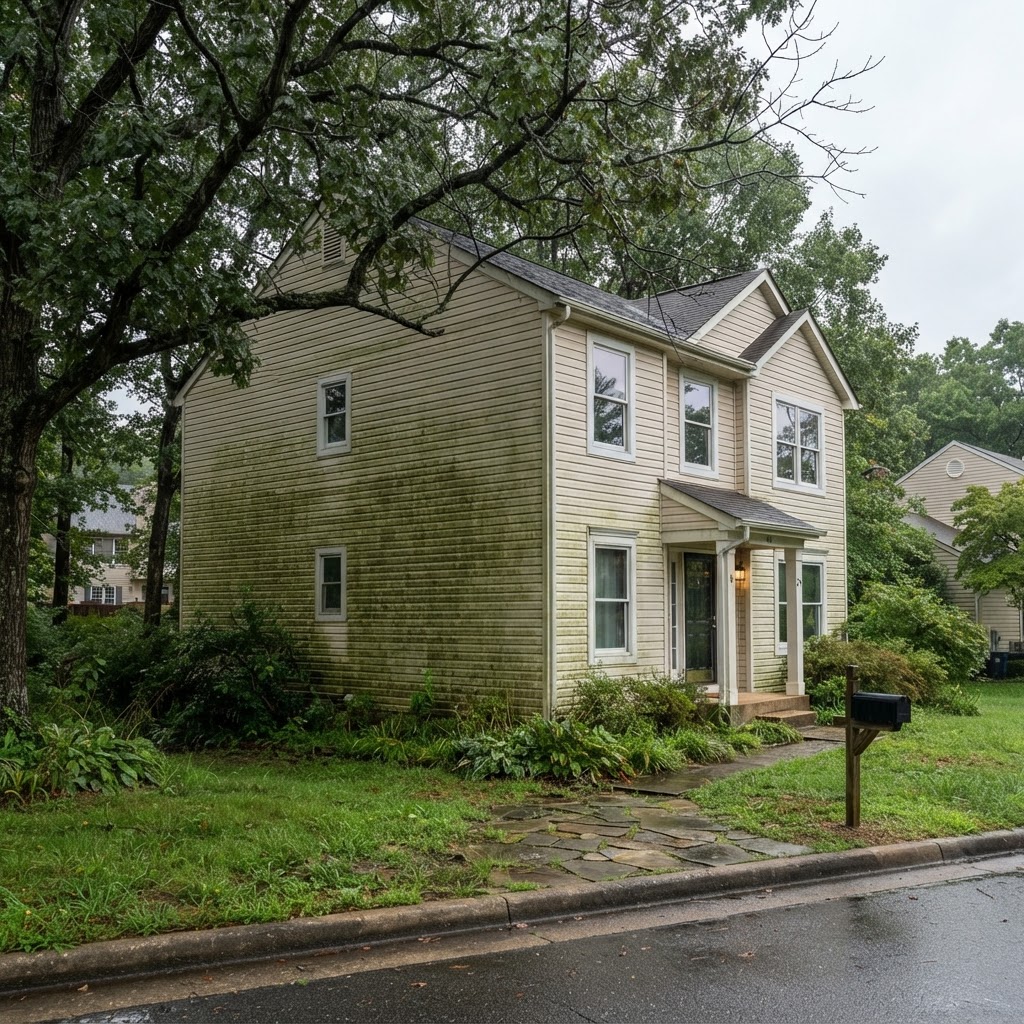
It always starts on the north side. A faint green tint on the shaded walls, spreading a little more each summer, until the whole house looks older than it is. That is not weathering — it is algae and mildew feeding on the dust and moisture your siding collects.
Why Shaded Siding Goes First
Airborne algae and mildew spores land on every exterior surface. On the sunlit walls they dry out and die; on the shaded, damp faces they take hold. Tree cover, humid Tennessee summers, and beds that hold moisture against the foundation accelerate it. Left alone, the growth thickens, etches into the surface, and eventually becomes permanent.
Why Pressure Washing Vinyl Backfires
The instinct is to blast it off. That is exactly the wrong move:
- High pressure drives water behind the panels, where it sits against the sheathing and feeds the mildew you cannot see or reach.
- Weathered vinyl oxidizes, and close-range pressure leaves visible zap lines and streaks in the finish.
- It only removes the top layer of growth. The root structure survives, and the green is back within a season — now with streaking in the finish.
How Soft Washing Handles It
Soft washing applies a cleaning solution at low pressure — garden-hose pressure or less. The solution kills the algae and mildew at the root, then a gentle rinse lifts it all away. Because the organism is dead instead of relocated, the siding stays clean far longer. Landscaping gets protected along the way, and the whole exterior dries to a uniform finish.
If your siding has gone green, the growth took years to build — but removing it is one of the most affordable upgrades your exterior can get.
HAVE A PROPERTY THAT NEEDS THIS?
Get a free site assessment and a straight price.