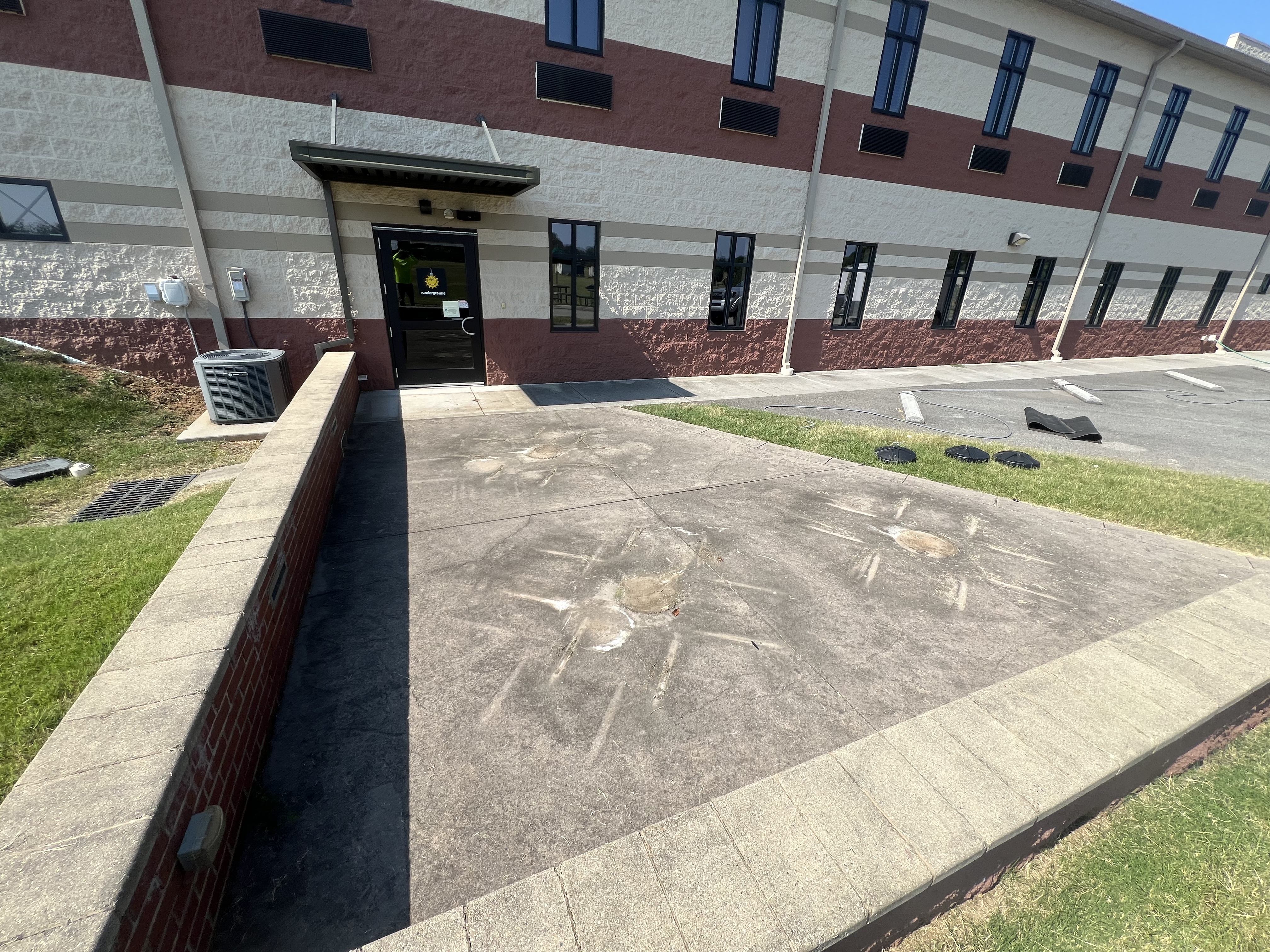
If your concrete has gone from light gray to dark charcoal, it is easy to blame traffic and weather. But most of that black film is not dirt at all — it is algae, mildew, and bacteria living inside the pores of the concrete itself. And it does not just happen on driveways — sidewalks, patios, pool decks, walkways, parking areas, and every other hardscape surface on the property are fighting the same battle.
Why Concrete Holds Onto It
Concrete is porous. Every pore holds a little moisture, and airborne organic dust settles into it constantly. Add shade from trees, a drainage area that stays damp, or fertilizer runoff from the lawn, and the surface becomes a growth medium. Then traffic adds tire residue and oil on top, and you get the dark, slippery film that a garden hose can never remove.
Every Surface, a Slightly Different Problem
- Driveways and parking areas collect tire residue, oil, and road grime on top of the organic film — the heaviest soiling on the property.
- Sidewalks and entry walkways grow algae where shade and irrigation keep them damp, which is also where it becomes a slip hazard for every visitor.
- Patios and pool decks stay wet by design, making them the fastest surfaces on the property to grow algae and mildew.
- Pavers and stone hardscapes hold growth not just on the surface but in the joints between them, where sand and organic debris collect.
The location changes, the organism does not. Wherever concrete stays shaded and damp, the black film follows.
Why It Comes Right Back After a Rinse
A quick pass with a homeowner-grade washer removes the top layer only. The colony inside the pores survives, and within a few weeks the film is visible again. Cleaning concrete without killing the growth is like mowing the weeds without pulling the roots.
The Right Process: Clean, Then Treat
- Pressure wash with a surface cleaner. A flat surface cleaner cleans evenly and prevents the zebra striping a single wand leaves behind — essential on the wide, visible expanses of driveways and patios.
- Treat for the growth that remains. A post-treatment applied to the clean surface kills the organisms left in the pores — which is why a professional job stays clean far longer than a rinse.
- Protect the joints and edges. On pavers and stone, the treatment reaches the joints where a surface cleaner cannot, so the whole hardscape dries uniform instead of patchy.
Keeping It Clean Longer
Trim back shade where you can, fix low spots that hold water, and consider a concrete sealer once the surface is truly clean. Then put the whole hardscape on the same schedule as the rest of the exterior — before it gets bad enough to notice, not after.
HAVE A PROPERTY THAT NEEDS THIS?
Get a free site assessment and a straight price.